Joint Trade Unions demand transparency over Imperial’s pay benchmarking

In brief (if you don’t have much time)

The Imperial Joint Trade Unions (JTU) have written to the University Negotiating Team (UNT) to raise serious concerns about the College’s handling of the 2018 Pay Benchmarking Working Group recommendations, the lack of transparency in its pay strategy, and the wider pay dispute that has led to strike action this term.

In 2018, staff were told their views would help shape principles for fair pay. The Working Group that followed recommended that pay for academic, research and teaching staff be benchmarked to the upper quartile of national comparators and the median of international comparators. These recommendations, informed by a wide staff consultation, were never shared with staff and have since been quietly ignored.

Instead, the College has adopted a weaker “median to upper quartile” position, reducing pay benchmarks and the value of salaries relative to comparator institutions. The JTU’s letter highlights contradictions and misinformation in the College’s account of events and makes two formal requests:

  1. An independent external investigation into how and why the 2018 recommendations were set aside; and
  2. An immediate return to negotiations with a significantly improved pay offer.

These demands form part of the JTU’s wider call for a fair settlement in the current Imperial pay dispute. The College has not yet responded to either request.


Read on for a deeper dive

In 2018, the then President launched a review to ensure that salaries were “commensurate with our position as a world-leading institution.” Staff were invited to contribute, and the Pay Benchmarking Working Group—chaired by Professor Nigel Brandon—was established to guide the process. The Working Group concluded that pay should be benchmarked to the upper quartile of national comparators and the median of international comparators. These principles were designed to keep Imperial’s pay competitive and to demonstrate respect for staff contributions.

However, the recommendations were never disclosed to staff, and management has since claimed—falsely—that its current approach is “consistent” with the 2018 principles. After being challenged by the unions, senior management admitted that only some principles had been adopted, with Professor Brandon claiming the Provost’s Board had decided in July 2021 not to implement the recommendations in full. When asked for evidence, he deferred to the College’s lead on pay, Audrey Fraser, who asserted instead that the decision was taken in April 2021.

The cited Board summary does not support either account; it simply records approval to continue and expand benchmarking work, not to weaken the standards. Likewise, a July 2021 statement from the then Provost reaffirmed the use of international benchmarks, entirely consistent with the 2018 principles. Despite multiple requests, no formal record of any decision to disregard the Working Group’s recommendations has been provided.

Errors, contradictions, and credibility

The JTU has also raised concerns about major errors in calculating the College’s median benchmark, which overstated Imperial’s relative pay levels by up to 35%. These flawed figures were used to justify cutting real pay, with this year’s 2% imposed increase falling far below inflation.

The Provost told Heads of Department that the benchmarking error “has not materially affected our position,” while the President told Felix that the data was “not so flawed that it would change our offer.” These statements confirm that no corrective action will be taken as long as pay remains above the median—a stance that treats further erosion down to that level as “immaterial.”

Why this matters

The JTU believes these failures reveal a serious breakdown of governance, transparency, and integrity. The 2018 consultation was presented as a genuine effort to rebuild trust; instead, staff input has been disregarded while the College continues to prioritise major infrastructure and capital projects over addressing the long-term erosion of staff pay.

These issues are not separate from the ongoing pay dispute: they are central to it. The erosion of pay, the refusal to negotiate meaningfully, and the lack of accountability over pay benchmarking all form part of the same pattern.

Consultation must be meaningful, governance must be accountable, and staff deserve pay that reflects their contribution to Imperial’s success. Misleading accounts and professions of concern are no substitute for material action. 

For more information about the ongoing Imperial pay dispute and recent strike action,

Request regarding university investments

Imperial UCU letter to the President, sent 17/1/25, and the response from the Provost, received 14/2/25:

—–

Dear Professor Brady,

Imperial College UCU branch are writing to you on behalf of UCU members to request greater transparency regarding the University’s investment and research partnerships. Specifically, we seek a full disclosure of any investments in, and links with, companies that engage in trade with Israel, and a review of the University’s position regarding these relationships.

It has been noted that Imperial College has both direct and indirect holdings in companies involved in supplying the Israeli military. Evidence suggest that direct holdings account for approximately 26% of the total value of all direct investments, spanning 17 companies. This has raised concerns among some stakeholders regarding the ethical implications of these investments, particularly considering rulings and statements made by international bodies such as the International Criminal Court (ICC) and the International Court of Justice (ICJ).

Furthermore, information obtained through a Freedom of Information request indicates that Imperial College has received research funding totalling over £7 million over the past five years from companies such as BAE Systems, Caterpillar, and Rolls Royce—organisations which have been reported to supply arms and military equipment to Israel. This raises questions regarding the alignment of such partnerships with the UN Principles of Responsible Research and the University’s broader ethical commitments.

We understand that University representatives have participated in meetings with concerned students to discuss these issues. At a recent ‘Investment Forum’ facilitated by the Student Union,  Provost Ian Walmsley stated that the University “does not comment on geopolitical events”, despite emailing all Imperial College students in March 2022 to explicitly condemn the Russian invasion of Ukraine. In response to questioning, neither the Provost nor the other senior management representative, Robert Kerse, were able to explain how the above investments and funding arrangements align with international human rights frameworks and responsible research principles, so clarity is still sought on these matters.

In a recent statement dated 20 June 2024, United Nations experts called for an immediate cessation of arms transfers to Israel, citing potential violations of international human rights and humanitarian laws. The statement also urged arms manufacturers, including BAE Systems, Caterpillar, and Rolls Royce, to review and halt such transfers, even under existing licenses, to mitigate any risk of complicity in international crimes.

Given the significance and urgency of these concerns, we kindly request that the University provides a comprehensive response addressing the following points:

  1. A full disclosure of the University’s investments in companies trading with Israel.
  2. An explanation of how these investments and research partnerships align with the University’s ethical policies and the UN Principles of Responsible Research.
  3. Any steps the University plans to take in light of the recent UN statement and evolving international legal frameworks.

We trust that you will treat this matter with the seriousness it warrants and look forward to receiving your response at your earliest convenience.

Regards,

                   Imperial UCU

—–

Dear Imperial UCU 

Many thanks for your email to Professor Brady, below.

Our ‘engage for change’ strategy is central to our overall approach to investment, seeking to drive societal benefit in a positive direction by aligning our strengths in research, teaching and innovation with our investment practices in a coherent way in order to maximise impact. Through this, we actively contribute to tackling critical environmental, social and corporate governance (ESG) challenges. By engaging with companies, we are aiming to influence change that will have a positive impact on companies and on the planet.

All investments via the Endowment are made in accordance with our domestic and international legal obligations, as well as the policies and procedures that govern the activities of the university, such as our Council’s Investment Strategy and our Socially Responsible Investment Policy. Additionally, our Relationships Policy establishes the governance framework that is applied to all of Imperial’s third-party relationships. The Relationships Policy includes an established process for consideration of relationships and an escalation procedure to the Relationships Review Committee for proposed (or existing) relationships including decisions about relationships concerning Specially Designated Fields of research, sensitive counterparties and countries.

We review and publish our full fund holdings on a quarterly basis. Where a specific investment is identified to be non-compliant with current policy, we engage with our investment managers and investment consultants to address the concern.

Imperial is also a signatory of the UN Principles of Responsible Investment (PRI), which were developed by an international group of institutional investors reflecting the increasing relevance of ESG issues to investment practices. The majority of the Endowment is managed by external investment managers, who are also PRI signatories and are instructed to apply screening and monitoring processes in line with the university’s regulations.  As a founding member of the Responsible Investment Network for Universities via ShareAction, we work with like-minded investors to amplify our efforts.

We value hearing the views of our community and continue to welcome opportunities and channels for engagement. For example, ICU recently organised a forum for the student community at which our students were able to raise issues concerning our investment policy directly with the Provost and Chief Operating Officer. We intend to work with ICU officers on future fora, while the regular In Conversation and Professional Services fora provide opportunities for staff to raise their questions with the President and other members of UMB.

All best wishes,

Ian

Ian Walmsley CBE FRS

Provost

Chair in Experimental Physics

Imperial College London

Imperial College 2024-25 pay offer ACCEPTED and pay disputes concluded

On 4/4/24 we were able to inform Imperial UCU members that the members of all three Imperial College affiliated trade unions voted to ACCEPT the College pay award for 2024-25.
The Joint Trade Union (JTU) pay negotiation team informed College management that the pay award has been accepted by the unions, and that this has formally ended the trade dispute over pay that has been running for approximately 3 years.
While this is good news, it is not without several caveats. We include below the full acceptance email sent to the College Negotiating Team (CNT) on the matter, where we also provide them with the principal features of the membership free text survey responses that outline membership sentiment and recognised shortcomings in the offer.
Regarding UCU members free text survey responses we have read and appreciated all of them, and will address every aspect in good time. For now we would just like to thank everyone who provided a response, and add that we especially appreciate the numerous expressions of gratitude and support that came in.

—–

Acceptance email to College management on the 2024-25 pay award

From:
Sent: 04 April 2024 18:26
To:
Subject: JTU response to the full & final pay offer 2024-25

Dear College Negotiating Team,

The JTU pay negotiation team are happy to report that members of all three trade unions have voted to ACCEPT the College’s “full & final pay offer” for 2024-25. We therefore:

(a) Accept the 2024-25 Imperial College pay offer, as detailed in emails exchanged on 14/3/24 and outlined on the College webpage and

(b) Formally end the long-running trade disputes over pay between all three trade unions and Imperial College.

We also feel it important to provide you with insights into the full range of views expressed. Each union provided members with the option of adding a comment alongside their vote on whether to accept or reject the pay offer. Each union received several constructive and useful comments; we provide a summary of the principal features of the comments that we think it is useful for the CNT to bear in mind:

The primary feature was that many members of all three unions took the time to express gratitude to the JTU side of the pay negotiations specifically, citing the difficulty of the role in the face of negotiating with the CNT in pay negotiations previously.

There were also a significant number of comments expressing dissatisfaction with the magnitude of the pay offer, noting that while it goes some way to restoring the spending power of College salaries after the pay cuts caused by high inflation over the last few years, it does not go far enough, and that the College could easily afford more, should it wish to. There were pointed remarks about the fact that only a small proportion of the USS savings were going to staff.

Two features of the pay offer were subject to extensive negative criticism:

(i) The “top up” for those above the £120K threshold was noticed by several members who expressed strong resentment that there should be what is perceived to be an enhanced financial protection for super-earners.

(ii) The CNT tactic from the 2023-24 pay negotiations of providing an offer of a £500 one-off payment which would be (and was) subsequently removed when the pay offer wasn’t accepted has clearly caused deep resentment. Members have variously and severally brought this up, referring to it as a “bribe”, a “threat”, and “act of blackmail”. Although not exactly the same, the explicit threat to withdraw the £1,000 consolidated payment was seen by many members as similar. Some stated they have rejected the offer on principle on this basis. You will recall our lengthy dialogues over this very point; the JTU would like to avoid this condition featuring in the future.

Imperial UCU solidarity with Goldsmiths

We were pleased to welcome Henrike Donner from Goldsmiths UCU to our quorate all members’ meeting earlier this month, where she spoke to us about the terrible threats of redundancies at their branch, where 25% of jobs are at risk as part of a major restructure.
They are currently balloting on strike action, and we voted to donate £500 from our branch to their strike fund.
See here and the Goldsmiths UCU Twitter account for further details and updates, including information on how to make an individual donation should you wish.

Imperial UCU supports workers at the RSA in their pay dispute

Charity workers at the Royal Society of Arts (RSA) are in the midst of a bitter pay dispute. Imperial UCU have passed a motion (full details in PDF below) to support the RSA union. We have sent a donation to the strike solidarity fund, and are asking Imperial UCU members to boycott any activities organised by the RSA.

Strike action continues at the RSA this month, with dates announced for the 26th – 28th February, and a demo outside the RSA Fellows’ Festival on 2nd March. Please do what you can to go along and support.

Imperial UCU motion with full list of resolutions here:

IC UCU RSA solidarity motion passed

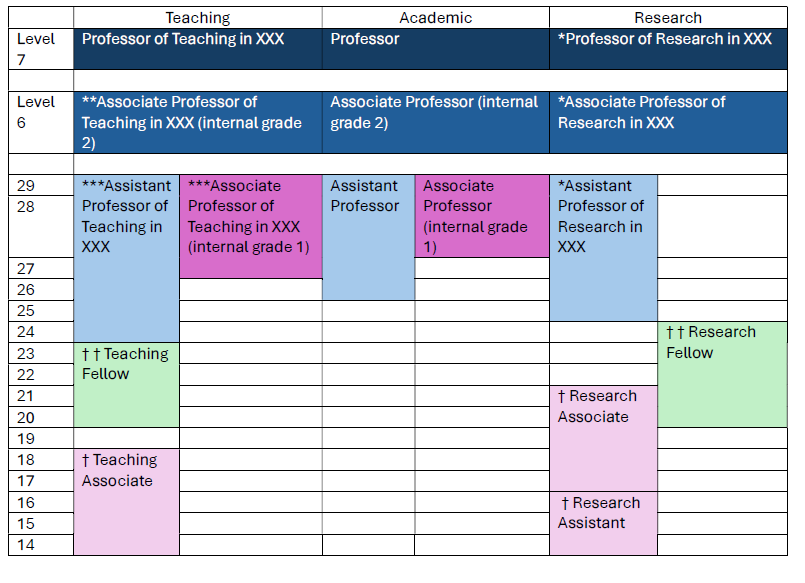
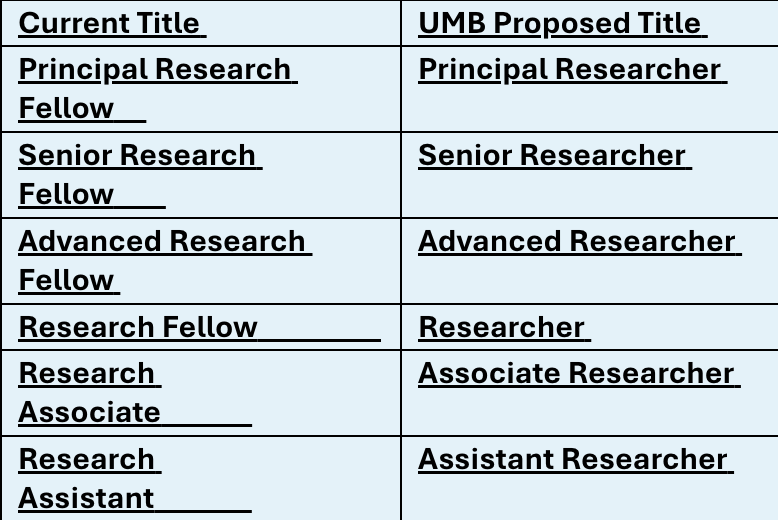
Imperial UCU response to the Academic job titles consultation exercise

Several UCU members contacted the union with some concerns and constructive criticisms regarding the current proposals on change to Academic job titles (see here – Consultation_Background_ Academic_Staff), and asked if the union might be able to provide a response to the consultation. Following this we asked for input across the whole membership (i.e. across all job families, and also including several members of the working group and related workstreams) on whether the UCU should provide a response, and, if so, what the response should say.

Following several written responses, and following a well-attended and constructive lunchtime meeting on Thursday 15th February 2024, open to the whole membership, we produced this response, which we sent to the Provost and working group members for consideration on Monday 19th February 2024.

Academic titles consultation UCU response

Imperial Joint Trade Unions’ negotiators’ report on the 2023-24 pay negotiations

Imperial College’s three recognised trade unions are consulting their members on the latest pay offer. Herewith the unions’ pay negotiators’ report, and consultation question as posed to members from Imperial UCU:

Negotiators’ report

The Joint Trade Unions (JTU) at Imperial College have continued to seek a resolution to the current pay disputes through an Acas conciliation process.  Our key aim in these negotiations has been to obtain an increase in the College pay offer for 2023-24, with any improvement consolidated into pay scales.  We have also sought to (i) reopen discussions in relation to the Professional, Technical and Operating staff pay scales which were previously close to agreement but which was ended unilaterally in 2022, and, (ii)  reach a satisfactory resolution for members impacted by deductions for undertaking the Marking and Assessment Boycott (MAB).

The context of these negotiations is that Imperial College has seen a significant improvement in its finances for 2022-23.  Where management initially predicted a small annual loss, there has been, in fact, a comfortable surplus.

Despite this surplus, Imperial College has made it clear that any possible improvement in the pay offer would be unconsolidated, i.e. provided as a one-off payment. In contrast, for a number of reasons, we have consistently stressed the need to incorporate any offer into pay scales. In an attempt to make progress we proposed to Imperial that they consider an increase in London Weighting (currently around £3,200) which is consolidated into pay scales. We reminded Imperial that a number of London Higher Education institutions are increasing their London Weighting payments: UCL, for example, has announced an increase to £4,500 from August 2023 and there will be a further increase to £5,000 for grades 1-7 in December. Kings College, London is currently in negotiation with the recognised trades unions in relation to an offer of £4,500 in August 2023.

The JTU are of the view that given the state of Imperial College’s finances, they could easily afford to offer the same payment.

The College has maintained that any improvement for pay for 2023 -24 would need to be financed by some of the savings that are predicted from reductions in employer contributions to the USS pension scheme. These reductions will be confirmed soon. We assured the College that USS predicts that these savings will be long-term and therefore offer enough certainty to consolidate any improvement into pay scales. The College is not prepared to accept this position and is only offering a taxable £500 non-consolidated payment in December.

Management is indicating that it is prepared to enter discussions on the PTO scale but is not prepared to move on proposed deductions from salary for members who participate in the MAB.

Since College has indicated that they will not discuss the matter further, we are now consulting you on its current offer even though this has not changed since we last consulted you. We are undertaking an electronic consultative ballot between Friday 1st and Friday 15th September 2023. Management has made it clear that if members do not accept their offer and end the disputes, then the desultory offer of a £500 unconsolidated payment will be withdrawn.

While we recognise that the additional offer of £500 is a result of members’ industrial action, the negotiators note that College could easily afford a higher offer and that the current one still reflects a significant real-terms pay cut. The JTU negotiators are therefore recommending rejection of this offer. We have also come to the conclusion that, given the intransigence of management, to obtain any more concessions, we would need to undertake further sustained and effective industrial action.


Ballot question

The pay offer put to us by management is the same as it was when we last consulted. The union is still recommending that you vote reject. The offer is:

  • A payment equivalent to a one-off lump sum of £625 in July 2023.
  • An increase in pay of 5.5% in August 2023 with a floor of £2,500 and ceiling of £5,000.
  • A one-off payment of £500 in December 2023.

Do you accept this offer?

Yes/no